
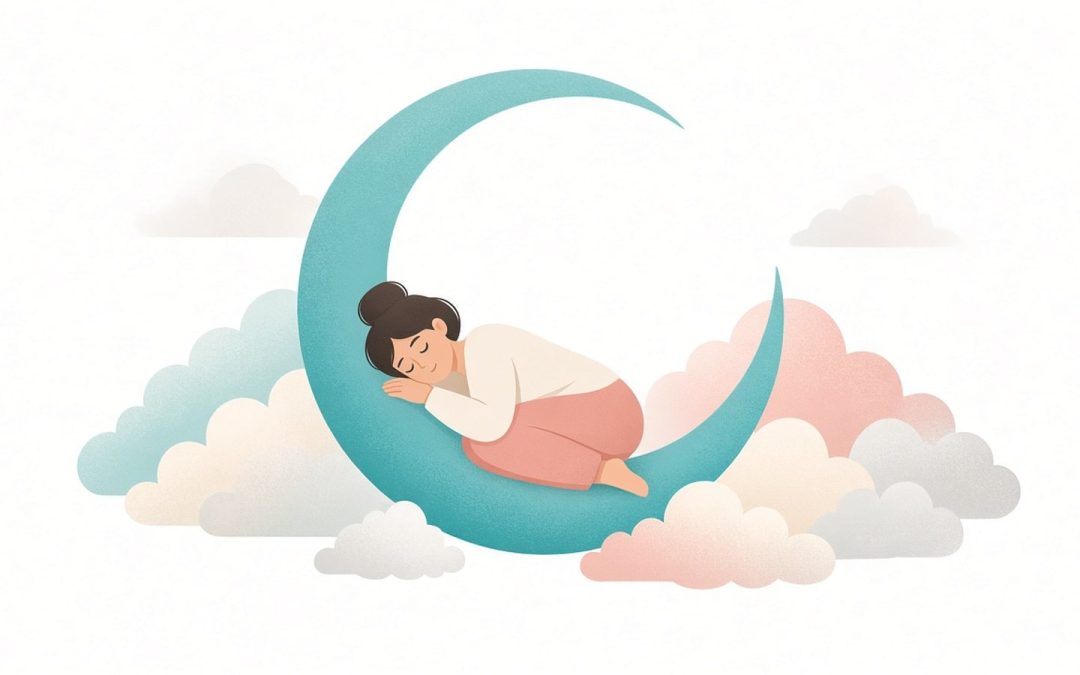
The short answer: Feeling tired after a panic attack is common. Mayo Clinic says, “You may feel fatigued and worn out after a panic attack subsides.” During an attack your body releases adrenaline and runs its fight-or-flight response at full speed, and coming down from that can leave you drained, shaky or sleepy. Rest, slow breathing, a glass of water, a small snack and a gentle walk can all help you recover. See a doctor if the tiredness lasts for weeks, affects your daily life or comes with other symptoms.
Feeling wiped out right now? Rootd is free to download on iPhone and Android, with guided deep breathing and soothing visualizations to help you settle, plus its Rootr panic button for the next time panic hits.
Download Rootd, free on iPhone and Android App Store Play Store Scan with your phone
The attack is over, your heart has slowed down, and now you feel like you could sleep for a week. If that’s where you are, you’re in good company, and needing time to recover is completely okay.
Why am I so tired after a panic attack?
A panic attack asks a lot of your body in a short time. Mayo Clinic explains that “Some research suggests that your body’s natural fight-or-flight response to danger is involved in panic attacks.” Your heart rate and breathing speed up as if you were in real danger.
Adrenaline floods your system
According to Cleveland Clinic, “When anxiety causes panic attacks, your body releases adrenaline because it thinks you’re in danger.” When adrenaline hits your bloodstream, your heart beats faster, you breathe faster, your digestion slows and you feel very alert. Cleveland Clinic adds that these attacks “put your body under stress each time, making your heart work harder.”
Your body puts everything else on hold
During the fight-or-flight response, anything your body “doesn’t need for immediate survival is placed on the back burner,” including digestion and tissue repair, explains a Cleveland Clinic article on the stress response. Meanwhile, “your body is using all its energy on the most crucial priorities and functions.”
Coming back down takes effort too
“Being in that stressful ‘fight-or-flight’ state can wear out your body,” a Cleveland Clinic doctor says in an article on the vagus nerve. “The parasympathetic nervous system and vagus nerve bring you back to a stable state when the stress is over.” Cleveland Clinic describes the parasympathetic nervous system as “a network of nerves that relaxes your body after periods of stress or danger.” So the heavy, drained feeling afterward makes sense. Your body has just been through an intense few minutes.
Fear and worry are tiring
The emotional side counts as well. The NHS puts it simply: “Stress uses up a lot of energy.” Worrying about having another attack can keep that drain going.
Is it normal to feel tired after a panic attack?
Yes. Mayo Clinic lists feeling “fatigued and worn out” after a panic attack as part of how attacks can go, and it reassures that “Panic attacks, while intensely uncomfortable, are not dangerous.” The NHS says the same: “An attack will not cause you any physical harm.” The National Institute of Mental Health (NIMH) adds that “the physical symptoms usually resolve with time.”
The NHS also points out that most panic symptoms “can also be symptoms of other conditions or problems,” so if your symptoms are new or feel different from usual, it’s worth getting checked.
What about feeling tired after an anxiety attack?
Many people use “anxiety attack” and “panic attack” to mean the same thing. The NHS describes panic as “the most severe form of anxiety,” so a big wave of anxiety can leave you drained in a similar way. The steps below help either way.
Why do I feel weak or shaky after a panic attack?
Weakness is part of many panic attacks. NIMH lists “Weakness or dizziness” among the physical symptoms during an attack, and the NHS lists trembling and shaky limbs. It’s understandable if your arms or legs still feel wobbly once the attack passes. Sit or lie down until you feel steady.
How long after a panic attack do you feel normal?
The attack itself is usually short. The NHS says “Most panic attacks last between 5 and 20 minutes,” and Cleveland Clinic says symptoms “usually peak within 10 minutes” and “then disappear soon after.” MedlinePlus notes that “Some symptoms continue for an hour or more.”
There’s no set timeline for the tiredness afterward. Cleveland Clinic says how quickly you calm down and return to your natural state “is going to vary from person to person.” If you’re still feeling off the next day, our guide to the panic attack hangover covers the after-effects that can linger, like brain fog and low mood.
How to recover when you’re exhausted after a panic attack
1. Let yourself rest. Find somewhere comfortable to sit or lie down. Remind yourself that the attack has passed and, as the NHS puts it, “remember it’s not life threatening.”
2. Slow your breathing. The NHS breathing exercise for stress “takes just a few minutes and can be done anywhere,” including lying on a bed. Let your breath flow into your belly, breathe in through your nose and out through your mouth, count from 1 to 5 on each breath if that helps, and “Repeat for at least 5 minutes.” Our guide to breathing exercises for panic attacks has more to try.
3. Have a glass of water. “Sometimes you feel tired simply because you’re mildly dehydrated,” says the NHS.
4. Eat something small. To keep your energy up through the day, the NHS suggests eating “regular meals and healthy snacks every 3 to 4 hours.”
5. Take a gentle walk. Once you feel steady, a little movement can help. The NHS says “Even a single 15-minute walk can give you an energy boost,” and Cleveland Clinic suggests taking a nature walk as one way to feel calmer when panic attacks make your body release adrenaline.
6. Talk to someone. Cleveland Clinic suggests that when you’re feeling nervous, “It may be time to phone (or text) a friend” (Cleveland Clinic). A short message is enough. If you are the friend getting that message, here is how to help someone having a panic attack.
7. Go easy on caffeine and alcohol. It’s tempting to reach for coffee, but MedlinePlus says “Stimulants (including caffeine) are not effective treatments for fatigue.” The NHS says caffeine, alcohol and sugary food and drinks “can all make attacks worse.”
8. Ground yourself in the present. Name five things you can see, four you can touch, three you can hear, two you can smell and one you can taste. See our guides to grounding techniques for anxiety and how to calm down from a panic attack for more.
9. Lighten the rest of your day. If you can, move one task to tomorrow. You’ve been through a lot.
When you’re running on empty after a panic attack, Rootd can help you settle. Open Breathr for guided deep breathing, try a guided body scan or visualization, or use the journal to track moods, habits and triggers over time.
Try the Rootr panic button, free App Store Play Store Scan with your phone
Is it okay to sleep after a panic attack?
If you feel sleepy and you’re somewhere safe, resting is a kind thing to do. If panic or worry is affecting your nights, these NHS sleep tips can help:
- go to bed and get up at the same time every day (NHS)
- take time to relax before you go to bed (NHS)
- aim for 6 to 9 hours of sleep (NHS)
- avoid smartphones or screens in the hour before sleep (NHS)
Making the next one a little easier
“The more we practice engaging that rest-and-digest response, the better our body gets at learning how to relax,” says a Cleveland Clinic psychologist (Cleveland Clinic).
To help prevent further attacks, the NHS suggests learning breathing exercises, trying activities like yoga and pilates, doing regular physical exercise, and reading a self-help book based on cognitive behavioural therapy (CBT). Mayo Clinic says “treatment can be very effective,” and the NHS notes “There’s some evidence that talking therapies such as counselling or cognitive behavioural therapy (CBT) might help to fight fatigue, or tiredness caused by stress, anxiety or low mood.” Over time, CBT techniques for panic attacks can reduce how often the cycle starts.
See a doctor if
- you’ve been feeling tired for a few weeks and you’re not sure why, or your tiredness affects your daily life (NHS)
- you feel tired and have other symptoms, such as weight loss or mood changes (NHS)
- you have unexplained weakness or fatigue, especially with a fever, unintentional weight loss or regular sweats (MedlinePlus)
- you’ve had panic attack symptoms and haven’t talked to a doctor yet, since Mayo Clinic advises you to “seek medical help as soon as possible” (Mayo Clinic)
- your panic attack symptoms last longer than 15 minutes, or you have sleep problems or difficulty concentrating along with panic attacks (Cleveland Clinic)
MedlinePlus says to contact your provider right away if you have confusion or dizziness, blurred vision, or thoughts of harming yourself or of suicide (MedlinePlus).
Call your local emergency number right away if you get sudden pain or discomfort in your chest that does not go away, pain that spreads to your arm, neck, jaw, stomach or back, or chest pain with sweating, feeling sick, lightheadedness or shortness of breath. The NHS says these could be signs of a heart attack, and Mayo Clinic notes that panic symptoms “can also resemble symptoms of other serious health problems, such as a heart attack.” In the US, NIMH advises, “In life-threatening situations, call 911 or go to the nearest emergency room.” If you are in emotional distress or having thoughts of suicide in the US, call or text 988 to reach the 988 Suicide & Crisis Lifeline.
Frequently asked questions
Why am I so exhausted after a panic attack?
During a panic attack your body releases adrenaline and switches into fight-or-flight mode, which makes your heart and lungs work harder (Cleveland Clinic). Coming back down from that, plus the stress of the fear itself, can leave you worn out.
Is it normal to feel tired after a panic attack?
Yes. Mayo Clinic says “You may feel fatigued and worn out after a panic attack subsides” (Mayo Clinic).
Is it normal to feel tired after an anxiety attack?
Many people use the two terms to mean the same thing, and panic is “the most severe form of anxiety,” according to the NHS. The same recovery steps can help.
How long after a panic attack do you feel normal?
Most panic attacks last between 5 and 20 minutes (NHS), but how quickly you return to your natural state varies from person to person (Cleveland Clinic). If tiredness goes on for weeks, see a doctor.
Is it normal to feel weak after a panic attack?
Weakness and dizziness are listed among panic attack symptoms (NIMH). Get any new or unusual weakness checked.
What helps exhaustion after a panic attack?
Rest, slow breathing, water, a small snack, a short walk and talking to someone. Skip the extra coffee: stimulants are “not effective treatments for fatigue” (MedlinePlus).
Be gentle with yourself
Feeling exhausted after a panic attack means your body has been working hard. Give it time and keep the rest of your day simple. If the tiredness keeps coming back, a doctor can help.
For the next time panic hits, Rootd is there in your pocket. Tap the Rootr panic button for support based on CBT techniques, open Breathr to slow your breathing, or try a guided visualization to help you rest afterward.
Open Breathr, free on iPhone and Android App Store Play Store Scan with your phone
Sources
- Mayo Clinic, “Panic attacks and panic disorder”
- NHS, “Panic disorder”
- National Institute of Mental Health, “Panic Disorder: What You Need to Know”
- Cleveland Clinic, “Panic Attacks and Panic Disorder”
- Cleveland Clinic, “Adrenaline”
- Cleveland Clinic Health Essentials, “What Is the Fight, Flight, Freeze or Fawn Response?”
- Cleveland Clinic Health Essentials, “Fight Anxiety With a Strong Vagus Nerve”
- Cleveland Clinic, “Parasympathetic Nervous System (PSNS)”
- Cleveland Clinic Health Essentials, “6 Ways To Calm Yourself Down”
- MedlinePlus, “Panic disorder”
- MedlinePlus, “Fatigue”
- NHS, “Breathing exercises for stress”
- NHS, “Tiredness and fatigue”
- NHS, “Self-help tips to fight tiredness”
- NHS, “Chest pain”
- National Institute of Mental Health, “Help for Mental Illnesses”
Medical disclosure: This article is for general information and is not a diagnosis or a substitute for professional medical advice or treatment. New, severe, or unexplained symptoms need medical assessment. For a possible medical emergency, call your local emergency number.