
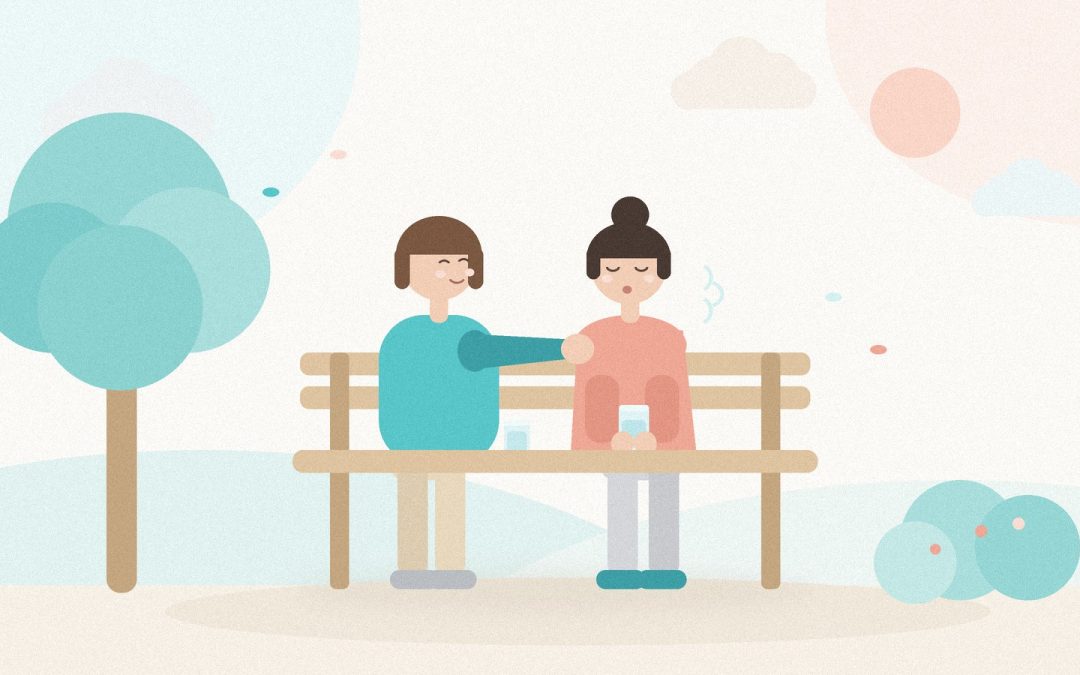
The short answer: How to calm someone down in a panic attack: stay with them, keep your own voice calm, and ask what they need. Speak in short, simple sentences, breathe slowly with them, help them focus on what’s around them, and gently remind them that the attack will pass. Most panic attacks last 5 to 20 minutes. If they have chest pain, trouble breathing or they pass out, or you can’t tell whether it’s a panic attack or a heart attack, call your local emergency number.
If panic attacks are a regular part of their life, Rootd is a free app they can turn to when you’re not there. Its Rootr panic button helps you “either face a panic attack head-on, or find comfort as quickly as possible.”
Download Rootd, free on iPhone and Android App Store Play Store Scan with your phone
Watching someone you care about have a panic attack can be scary. They might be shaking, breathing fast or saying they think they’re dying. You don’t need special training to help. Your calm presence is often the most useful thing in the room.
This guide is for the person standing next to someone who is panicking. If you’re the one having panic attacks, our guide on what to do during a panic attack is written for you.
What should you do when someone is having a panic attack?
Stay with them, stay calm, and ask what they need. Cleveland Clinic suggests you “Stay with them and remain calm,” “Ask them what they need,” and “Speak to them in short, simple sentences.”
Cleveland Clinic explains: “When you’re having a panic attack, you may sweat a lot, have difficulty breathing and feel like your heart’s racing. It may feel like you’re having a heart attack.” Mayo Clinic adds that “you might think you’re losing control, having a heart attack or even dying.” Our guide to panic attack symptoms covers the full list.
How do you calm someone down in a panic attack?
Keep things slow and simple: stay close, breathe with them, bring their attention to the present, and reassure them it will pass. Here’s how that can look, step by step.
1. Stay calm yourself. Slow your own breathing, lower your voice and move gently.
2. Ask what they need. Some people want a hand to hold, others want space. If they’ve had panic attacks before, they may already know what helps. A simple “What would help right now?” is enough.
3. Use short, simple sentences. Keep it brief. Try “I’m here,” “Let’s breathe,” or “You’re doing well.”
4. Breathe with them. Cleveland Clinic suggests you “Help them practice deep breathing by slowly counting to five for each inhale and exhale.” The NHS breathing exercise for stress uses the same idea: “breathing in through your nose and out through your mouth,” and some people “find it helpful to count steadily from 1 to 5.” Breathe out loud so they can follow your rhythm. For more patterns to try together, see our breathing exercises for panic attacks.
5. Help them notice the present. Cleveland Clinic suggests you “Help them focus on the present.” Gently ask them to name things they can see or hear, or to feel their feet on the floor. Cleveland Clinic also notes that “using your other senses, like smell and touch, can be helpful.” The 5-4-3-2-1 grounding method is an easy one to talk someone through.
6. Remind them it will pass. Cleveland Clinic advises you to “Gently and confidently reassure them that they’re safe and that the attack is temporary.” The NHS says “A panic attack usually lasts 5 to 20 minutes. They can be frightening, but they’re not dangerous and should not harm you.” Only say they’re safe if nothing about the situation worries you medically (see the emergency signs below).
7. Let them stay put. The NHS advice for someone having a panic attack starts with “stay where you are, if possible.” If it’s loud or crowded, ask if they’d like to move a few steps to a calmer spot.
Rootd has a few tools you can use together in the moment: the Rootr panic button, guided deep breathing with Breathr, and soothing visualizations. If they’d like to try it, it’s free to download.
Try the Rootr panic button, free App Store Play Store Scan with your phone
What should you say to someone having a panic attack?
Say short, calm, kind things that tell them you’re there and the feeling will pass. Your tone matters more than perfect words.
Phrases that many people find comforting:
- “I’m right here with you.”
- “This is a panic attack. It will pass.”
- “Let’s breathe together. In for five, out for five.”
- “Can you tell me three things you can see?”
- “What would help right now?”
- “You’re doing really well.”
Afterward, it helps to acknowledge how hard it was. In an article for families, Cleveland Clinic psychologist Adam Borland, PsyD, gives an example of validating words: “Those panic attacks sound scary. I’m sorry that’s happening to you.”
What should you not do during a panic attack?
Avoid anything that makes them feel judged, rushed or alone. Small things make a big difference:
- Don’t tell them to “just calm down.” If they could, they would.
- Don’t brush it off. Cleveland Clinic’s advice for loved ones is “don’t be dismissive,” and “Don’t try to offer solutions or tell them to look at the bright side of things.”
- Don’t leave them alone unless they ask for space, and even then stay nearby.
- Don’t crowd them. Keep a gentle distance, and ask before you touch them.
- Don’t panic with them. If you feel shaky, focus on your own slow breathing first.
Is it a panic attack or a heart attack?
From the outside, you can’t always tell, so treat chest pain seriously. Mayo Clinic says “Panic attack symptoms can also resemble symptoms of other serious health problems, such as a heart attack,” and the NHS says the symptoms of a panic attack “can also be symptoms of other conditions or problems.”
The NHS lists heart attack symptoms that include “chest pain which may feel like crushing or squeezing on your chest,” pain that may “spread to your arm, neck and jaw,” “feeling short of breath,” and “sweating.” The CDC says most heart attacks involve chest discomfort “that lasts for more than a few minutes or that goes away and comes back.” It adds that “unusual or unexplained tiredness and nausea or vomiting” can also happen, and “Women are more likely to have these other symptoms.”
If they’ve never had a panic attack before, or this one feels different, don’t guess. Call for help.
See a doctor if
Call your local emergency number (911 in the US, 999 in the UK) if the person:
- has chest pain, trouble breathing or loses consciousness. Cleveland Clinic says these need “emergency medical care”
- has “chest pain that feels tight or like squeezing on your chest” or “chest pain that’s spreading to your arms, neck or jaw” (NHS)
- is “gasping, choking or not able to get words out” (NHS)
- has lips or skin that look “pale, blue or grey” (NHS)
- has never had a panic attack before and you can’t be sure what’s happening
- says they can’t keep themselves safe. The NHS says to call 999 if “you do not feel you can keep yourself or someone else safe,” and that “A mental health emergency should be taken as seriously as a physical one” (NHS)
The CDC says “If you notice the symptoms of a heart attack in yourself or someone else, call 9-1-1 immediately.” In the US, NIMH adds that people in emotional distress can “Call or text 988” to reach the 988 Suicide & Crisis Lifeline (NIMH).
Encourage them to book a doctor’s appointment if:
- it was their first panic attack. Mayo Clinic says “If you have panic attack symptoms, seek medical help as soon as possible.”
- their symptoms last longer than 15 minutes, or they have “Chronic (long-lasting) anxiety that interferes with daily life” (Cleveland Clinic)
- they’ve started to fear leaving home or avoid places where attacks happened
- panic attacks keep coming back
What should you do after a panic attack passes?
Give them time to recover and let them set the pace. Mayo Clinic says “You may feel fatigued and worn out after a panic attack subsides,” so they may want to sit for a while, sip some water, or go somewhere quiet to rest.
Later, when they feel steadier, ask what helped and what didn’t, so you’re ready next time. Look after yourself too. It’s okay to feel shaken and to talk it over with someone you trust.
How can you support someone with panic disorder?
Learn about panic disorder, talk openly with them, and gently encourage professional help. The National Institute of Mental Health (NIMH) says “A good way to help yourself or a loved one who may be struggling with panic attacks or panic disorder is to seek information.”
Panic disorder is more than the odd attack. The NHS explains that someone with panic disorder “has feelings of anxiety, stress and panic regularly and at any time, often for no apparent reason.” People may avoid situations they fear will set off another attack, which the NHS describes as a cycle of living in “fear of fear.”
A few ways to help over the longer term:
- Pick a calm moment to talk. NIMH suggests you “set aside a time to talk with them to express your concern and reassure them of your support.”
- Gently suggest help. Cleveland Clinic gives an example: “How would you feel about talking to your doctor about what you’re going through?” If they’re not ready, it advises, “don’t argue with them or try to force the issue. Wait a while and then gently suggest again.”
- Offer to come along. Mayo Clinic suggests asking “a trusted family member or friend to go with you to your appointment, if possible.”
- Know when it’s time. NIMH says that if anxiety “starts to cause problems in everyday life,” it’s “time to seek professional help.”
- Make a plan together. While they’re calm, ask what they’d like you to do during an attack.
Frequently asked questions
How long does a panic attack last?
The NHS says “Most panic attacks last between 5 and 20 minutes. Some have been reported to last up to an hour.” Cleveland Clinic says “Symptoms usually peak within 10 minutes after it starts.”
Can you stop someone’s panic attack?
Usually you can’t switch it off. Cleveland Clinic says “there’s no way to immediately stop a panic attack right after it starts,” but there are steps that help manage the symptoms “until the attack resolves.” Staying calm and breathing with them can make those minutes easier.
Should I call an ambulance for a panic attack?
Call your local emergency number if they have chest pain, trouble breathing or pass out, or if you think it could be a heart attack. Cleveland Clinic says “Some panic attacks have signs that can resemble a physical problem, like a heart attack.”
You don’t have to get it perfect
You won’t always know the right thing to say, and that’s okay. Staying close, breathing slowly and being kind already helps a lot.
Rootd can help your friend or family member between attacks, too. It has the Rootr panic button for hard moments, a journal to spot triggers, lessons on how panic works, and an emergency contact feature that lets them “immediately call a friend, family member, or nearby help center directly from the app.”
Open Breathr, free on iPhone and Android App Store Play Store Scan with your phone
Sources
- NHS, “Panic disorder”
- NHS, “Get help with anxiety, fear or panic”
- NHS, “Breathing exercises for stress”
- NHS, “Heart attack”
- NHS, “Where to get urgent help for mental health”
- Mayo Clinic, “Panic attacks and panic disorder,” Symptoms and causes
- Mayo Clinic, “Panic attacks and panic disorder,” Diagnosis and treatment
- Cleveland Clinic, “Panic Attacks & Panic Disorder”
- Cleveland Clinic, “Panic Attack vs. Anxiety Attack”
- Cleveland Clinic, “Signs Someone Is Struggling With Anxiety”
- National Institute of Mental Health (NIMH), “Panic Disorder: What You Need to Know”
- National Institute of Mental Health (NIMH), “Help for Mental Illnesses”
- CDC, “About Heart Attack Symptoms, Risk, and Recovery”
Medical disclosure: This article is for general information and is not a diagnosis or a substitute for professional medical advice or treatment. New, severe, or unexplained symptoms need medical assessment. For a possible medical emergency, call your local emergency number.