
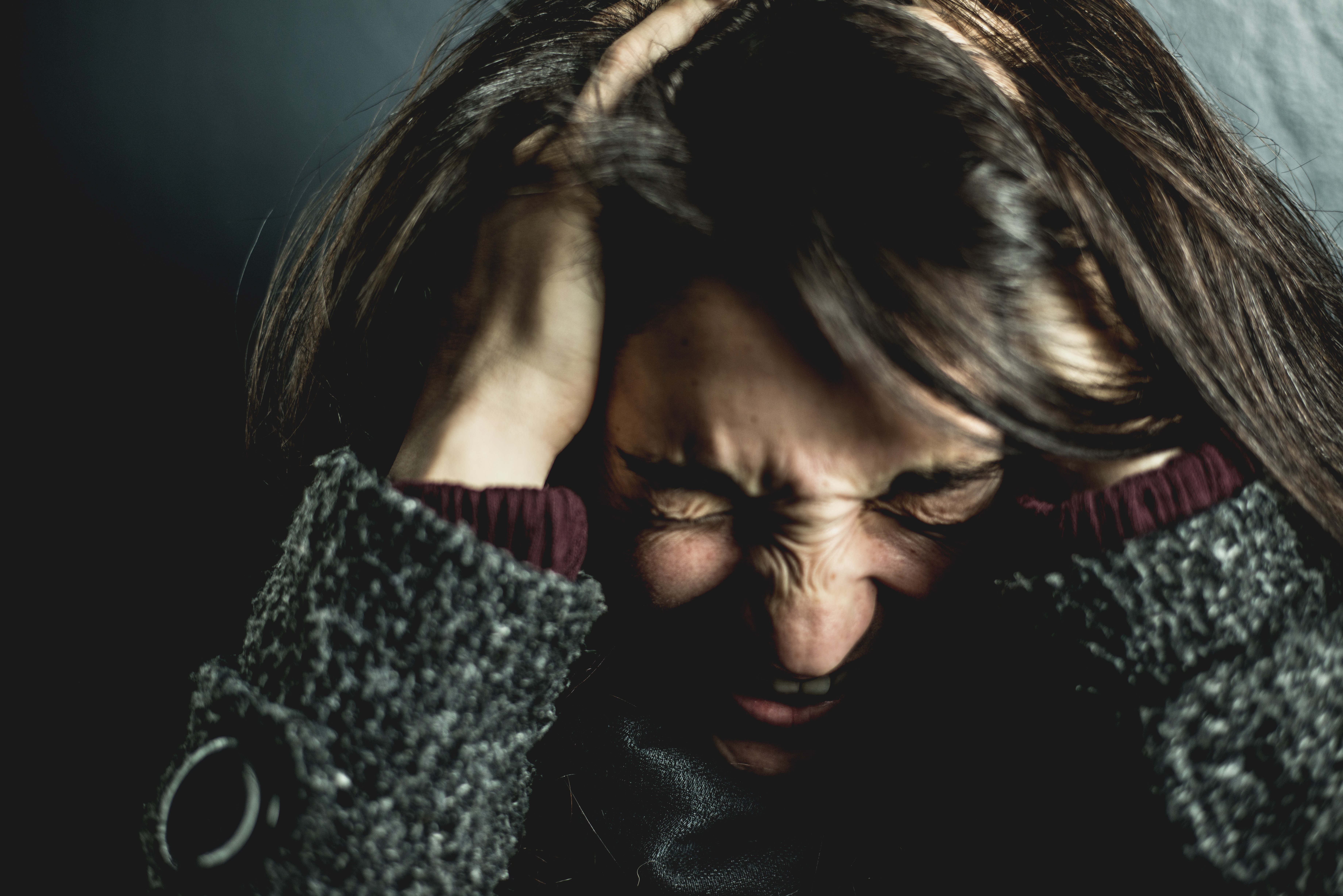
The short answer: Stress and anxiety are related, but they are different things. So if a quiz asks whether “stress and anxiety are two different words that mean the same thing,” the answer is false. The US National Institute of Mental Health (NIMH) explains that “Stress is the physical or mental response to an external cause, such as having a lot of homework or having an illness,” while “Anxiety is your body’s reaction to stress and can occur even if there is no current threat.” Stress “Goes away once the situation is resolved,” while anxiety usually involves a feeling of apprehension or dread “that doesn’t go away.”
Feeling wound up right now? Rootd is free to download on iPhone and Android, with guided deep breathing for times of stress and a panic button for the moments when anxiety turns into panic. Download Rootd
The terms stress and anxiety are often considered to be the same thing and are used interchangeably. While there are some overlapping symptoms between the two, they are distinctly different. The two are related to your body’s natural fight or flight response, which releases stress hormones. Anxiety is part of how your body responds to stress. In this article, we will look at the difference between anxiety and stress.
Stress vs anxiety: what is the difference?
Here is how the two compare side by side, based on the NIMH stress vs. anxiety fact sheet.
| Stress | Anxiety | |
|---|---|---|
| What sets it off | Usually a response to an external cause, such as a big test or an argument with a friend | Generally internal: your reaction to stress, and it can happen even when there is no current threat |
| Timing | Can be a one-time or short-term event, or happen repeatedly over a long time | Can feel constant, even when there is no immediate threat |
| How it ends | Goes away once the situation is resolved | A persistent feeling of apprehension or dread that doesn’t go away |
| Typical feelings | Worry or mental tension about a difficult situation; it can be positive (helping you meet a deadline) or negative (costing you sleep) | Apprehension or dread, feeling tense or nervous, being unable to relax, fear of the worst happening |
Both can affect your mind and body. NIMH lists shared symptoms such as excessive worry, uneasiness, tension, headaches or body pain, high blood pressure and loss of sleep. The “typical feelings” row also draws on the World Health Organization (WHO) definition of stress and the NHS list of anxiety symptoms.
Are stress and anxiety the same thing?
No. They overlap and often show up together, which is why the words get mixed up. WHO defines stress as “a state of worry or mental tension caused by a difficult situation” and says stress “can come with a range of emotions, including anxiety and irritability.” Some anxiety is part of everyday life too. Cleveland Clinic says “It’s normal to have some anxiety,” for example before an interview, a test or an important decision.
The biggest difference shows up after the pressure passes. For many people, WHO says, “stress reduces over time as the situation improves.” Anxiety can stay. With anxiety disorders, NIMH explains, “anxiety does not go away, is felt in many situations, and can get worse over time.”
What is stress?
Stress is how your body responds to pressure of some kind, whether it is a threat, change, or pressure of some kind. The way your body responds can be mental, physical, or emotional. Stress is something that everyone experiences throughout their life in varying degrees, and everyone responds differently to them.
Stress is not necessarily a bad thing. Stress can help motivate you to do things and concentrate on what you are doing. For example, if you have a big paper due that is stressing you out, the stress can help motivate you to get it done in time. Bad stress, on the other hand, is not good for you, especially if it becomes chronic or too overwhelming. Constant stress can lead to depression, trouble sleeping, pain, and other physical and mental health problems.
Some common stressors include:
- Pressures at home, school, or work.
- Financial problems
- Getting injured or sick
- Being too busy
- A sudden change in life, like losing your job, divorce, or death
- A traumatic experience
What is anxiety?
“Anxiety is the state of apprehension and fear experienced when anticipating a real or imagined threat, event or situation.” Anxiety is a normal reaction to stress sometimes; it is feelings of nervousness, worry, and fear. You might feel anxious before a job interview or when walking alone down a dark street, for example, and that is perfectly natural. It is your body preparing for its fight or flight reaction, so it can be healthy in small doses.
However, anxiety can become chronic and lead to anxiety disorders. For some people, anxiety can get out of control, and it may prevent them from doing things like trying something new, going to work, or spending time with friends.
Some things that can trigger anxiety include:
- Conflicts with people at work, school, or home
- Insomnia or trouble sleeping
- Public speaking
- Financial problems
- Health problems
- Things related to a traumatic event
If you notice stress turning into anxiety, Rootd’s Breathr tool guides you through deep breathing, and its Rootr panic button is there for the moments that tip into panic. Download Rootd
Is it stress or anxiety? How to tell the difference
You are probably experiencing both stress and anxiety at the same time, but one might be more overwhelming than the other. Let’s take a look at some signs to help you tell the difference.
Is the cause internal or external?
While you can stress yourself out, stress is mostly caused by external factors. Anxiety is more internal, and NIMH describes it as “your reaction to stress.” If those stressors are removed, like you finish the big paper you have been worried about, and you still feel worried or on edge, it may be anxiety that you are feeling.
Is it hard to function?
Stressful situations can be hard, but WHO notes that “Most of us manage stress well and continue to function.” Anxiety, on the other hand, can make it difficult to function and manage normal daily tasks. Stress can also bring on panic attacks, which Cleveland Clinic lists among its psychological symptoms. NIMH says you may be at risk for an anxiety disorder if it feels like you can’t manage the stress and your symptoms “Interfere with your everyday life,” “Cause you to avoid doing things,” or “Seem to be always present.” Only a health professional can tell you what is going on, so these signs are a good reason to book an appointment.
Is your reaction excessive?
There are situations that are going to be stressful for anyone, but the reaction to them is what can help you determine if you are experiencing stress or anxiety. If your reaction feels like it is bigger than it should be or is much bigger than how others are responding to the situation, it might be anxiety instead of stress.
Do you dread or fear things that haven’t happened?
When you are stressed, you are having a response to something that is happening or about to happen. Anxiety can bring worry or dread about things that have not happened and may never happen. NIMH describes anxiety as “a persistent feeling of apprehension or dread” that can be there “even if there is no immediate threat.” This is another example of anxiety being linked to more internal stressors than external ones.
How to cope with stress and anxiety
NIMH says that “Learning what causes or triggers your stress and what coping techniques work for you can help reduce your anxiety and improve your daily life.” Its suggestions include:
- Keeping a journal.
- Using an app that offers relaxation exercises, such as deep breathing or visualization, or tips for practicing mindfulness. Our guide to the best apps for stress relief compares a few options.
- Exercising and eating healthy, regular meals.
- Sticking to a sleep routine and getting enough sleep.
- Avoiding excess caffeine, such as soft drinks or coffee.
- Identifying and challenging negative and unhelpful thoughts.
- Reaching out to friends or family members who help you cope in a positive way.
WHO adds that “Spending too much time following news on television and social media can increase stress.” If screens and notifications leave you frazzled, read about anxiety in the digital age. For techniques to use in the moment, see our guide on how to calm anxiety.
When to get help
NIMH says, “If you are struggling to cope, or the symptoms of your stress or anxiety won’t go away, it may be time to talk to a professional.” The NHS suggests seeing a GP if “you’re struggling to cope with stress” or “things you’re trying yourself are not helping.” For anxiety, the NHS says it is more likely to be generalised anxiety disorder “if you feel anxious most of the time and it affects your everyday life.”
If you’re in crisis in the US, NIMH says to call 911 or go to the nearest emergency room in life-threatening situations, and if you are suicidal or in emotional distress you can call or text 988 to reach the 988 Suicide & Crisis Lifeline. Outside the US, call your local emergency number.
Frequently asked questions
Are stress and anxiety two different words that mean the same thing?
False. Stress and anxiety are closely linked, but they are different. NIMH describes stress as a response to an external cause and anxiety as your body’s reaction to stress, which can occur even if there is no current threat.
What is the main difference between stress and anxiety?
How they start and how they end. According to NIMH, stress is generally a response to an external cause and goes away once the situation is resolved. Anxiety is generally internal and can feel constant, even when there is no immediate threat.
Can stress turn into anxiety?
They are closely connected. NIMH calls anxiety “your body’s reaction to stress,” and Cleveland Clinic notes that “Experiencing a lot of stress over a long period can contribute to an anxiety disorder.”
Is it normal to feel stressed or anxious?
Yes. The NHS says “Most people feel stressed sometimes” and “Most people feel anxious or scared sometimes.” If either one is affecting your life, support is available.
Final Thoughts
Stress and anxiety may be a normal reaction to life, but they can get out of control for some people. If you feel like this is taking control of your life and preventing you from functioning, it might be time to seek help for your anxiety. Talk to your doctor, seek out therapy, or try other ways to cope. The first step is to acknowledge your anxiety so that you can begin to take control of your life.
For the moments when stress or anxiety builds, Rootd is free to download and keeps guided deep breathing and a panic button on your phone. Download Rootd
Sources
- National Institute of Mental Health, “I’m So Stressed Out! Fact Sheet”
- National Institute of Mental Health, “Anxiety Disorders”
- National Institute of Mental Health, “Help for Mental Illnesses”
- World Health Organization, “Stress” (questions and answers)
- Cleveland Clinic, “Stress”
- Cleveland Clinic, “Anxiety Disorders”
- NHS, “Get help with stress”
- NHS, “Get help with anxiety, fear or panic”
- NHS, “Generalised anxiety disorder (GAD)”
Medical disclosure: This article is for general information and is not a diagnosis or a substitute for professional medical advice or treatment. New, severe, or unexplained symptoms need medical assessment. For a possible medical emergency, call your local emergency number.